Fresno Fails Again for Air Pollution Scores
According to the American Lung Association’s 2026 “State of the Air” report, every resident of Fresno County is living in a community with failing grades for air quality.
In a state where 82% of residents breathe unhealthy air, Fresno consistently remains at the center of the nation’s air quality crisis.
Fresno’s Air by the Numbers
- Fresno is one of the few metropolitan areas to receive a failing “F” grade in all three categories: Ozone, Short-term Particle Pollution, and Year-round Particle Pollution.
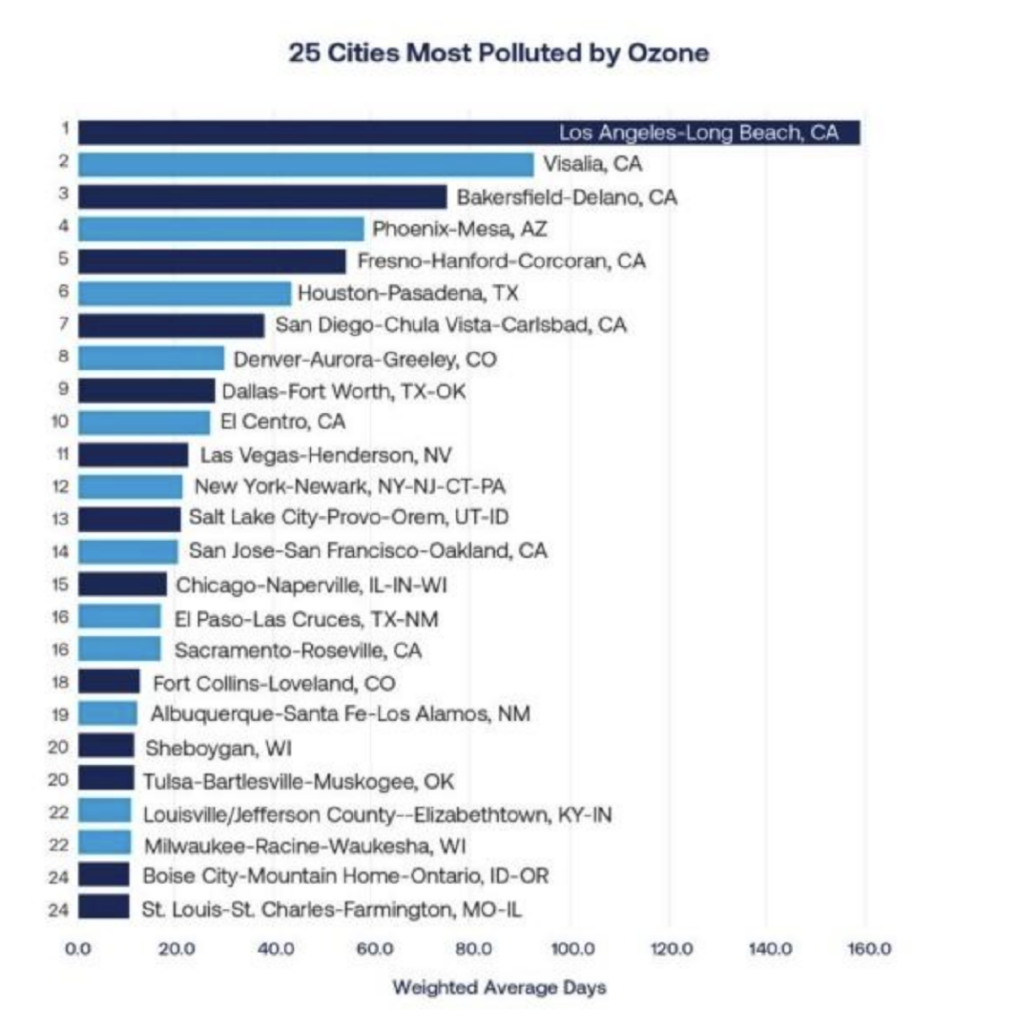
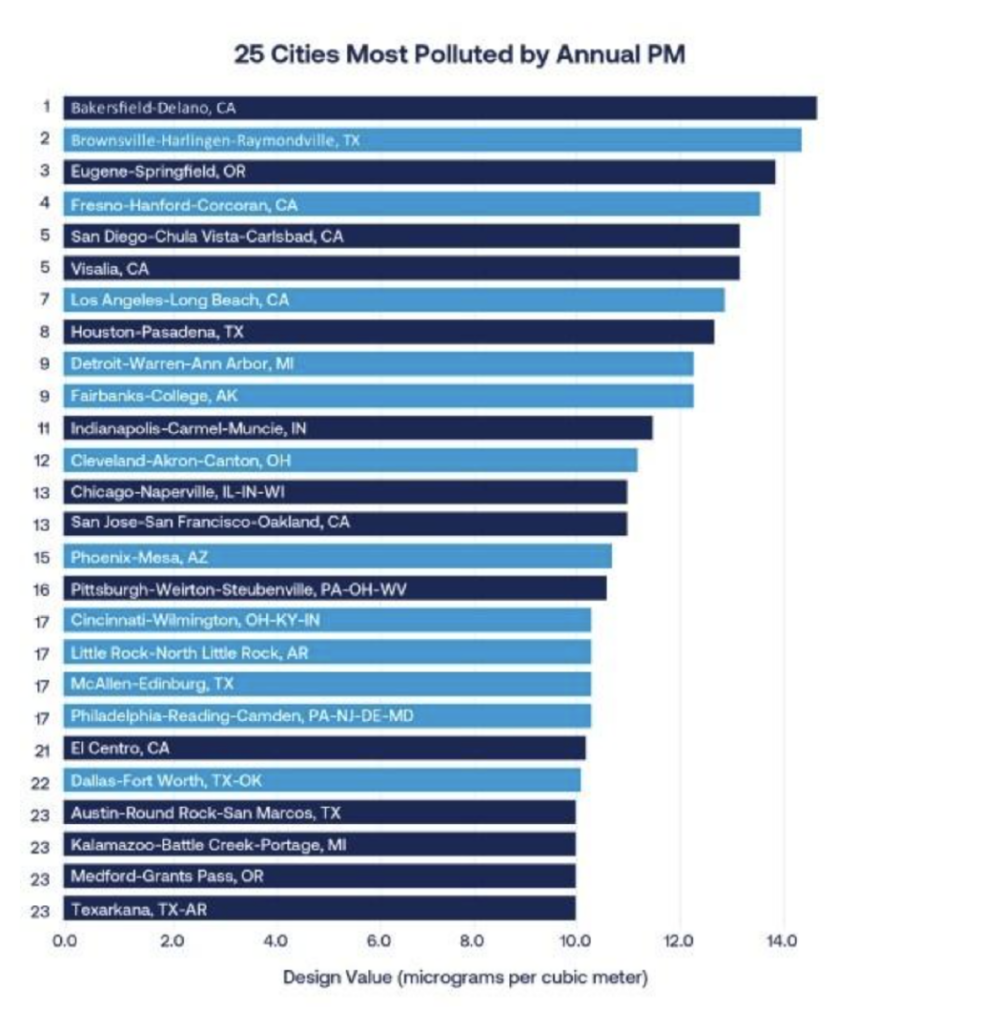
- Fresno ranks as the 4th most polluted city in the nation for year-round particle pollution (PM2.5) and 5th worst for ozone.
- Over 78,000 residents in Fresno County suffer from asthma (18,996 children and 59,330 adults).
- In South Central Fresno, residents are exposed to pollution levels in the top 1% of the state, according to CalEnviroScreen 4.0.
- Fresno recorded 54.5 days of unhealthy ozone levels this year, fueled by rising temperatures that turn vehicle exhaust into stagnant smog.
Why Fresno Residents Can’t Breathe
To understand Fresno’s air is to understand its geography. Flanked by the Sierra Nevada to the east and the Coastal Ranges to the west, the San Joaquin Valley acts like a giant bowl. Historically, this stagnant air was filled with dust and wood smoke. Today, it is a chemical soup. While Fresno has seen slight improvements in short-term spikes of pollution compared to a decade ago, the baseline of year-round particle
Over the years, decision-makers have found it easier to place sources of pollution such as power plants, industrial facilities, landfills and highways, in or near economically disadvantaged communities of color than in more affluent, predominantly white neighborhoods. The resulting disproportionate exposure to air pollution has contributed to high rates of emergency department visits for asthma and other diseases.
pollution remains dangerously high. This is the result of decades of land-use decisions that prioritized heavy industry and freeway expansion over neighborhood health.
The Health Toll
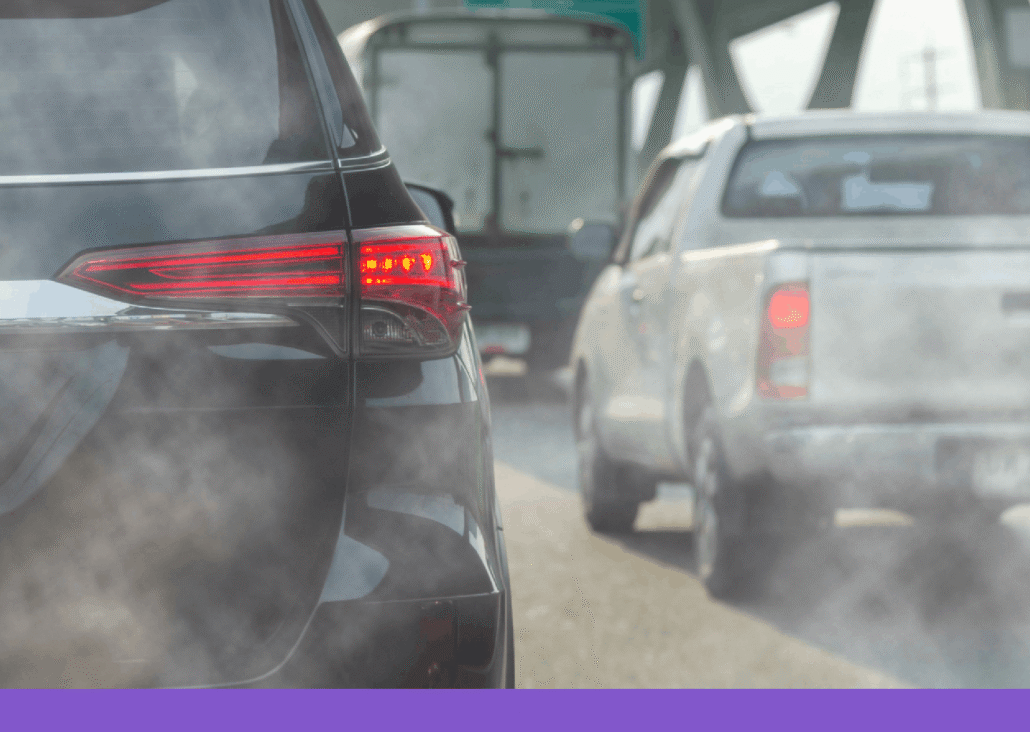
Ground-level ozone is not emitted directly but “cooks” in Fresno’s intense heat. It forms when nitrogen oxides (NOx) from vehicle exhaust react with volatile organic compounds (VOCs) in sunlight.
“When people breathe ozone air pollution, the lining of their lungs can become irritated and inflamed, much like a sunburn on the skin. Other symptoms include coughing, wheezing, pain when taking a deep breath, and breathing difficulties during exercise or outdoor activities.”
Chronic exposure to ozone is linked to the development of COPD and permanent lung scarring. In Fresno, where ozone season now stretches for months, even healthy young adults experience chest tightness and decreased lung function.
Particle pollution, or PM2.5, consists of bits of solids and liquids (toxic compounds, salts, and metals) that are a byproduct of the heavy-duty diesel traffic and industrial combustion common in South Fresno.
Unlike larger particles (dust or pollen), PM2.5 is small enough to bypass the body’s natural defenses. These particles penetrate deep into the lung’s air sacs. The smallest particles (ultrafine PM) can pass directly through the air sacs into the bloodstream. Once in the blood, they disperse to other organs, triggering systemic inflammation and oxidative stress.
Research now confirms that even short-term spikes in PM2.5, lasting only a few hours, can trigger heart attacks, strokes, and premature death. There is no “safe” threshold for exposure.
Vulnerable Populations
Nearly 278,000 children in Fresno County are breathing air that could permanently alter their health.
Children breathe more air per kilogram of body weight than adults, meaning they receive a higher “dose” of pollution. Because their lungs are still developing until early
Air pollution disproportionately harms children in disadvantaged communities. A 2025 children’s environmental health analysis found that EPA’s rule making in reducing air pollution, particularly in setting PM2.5 standards, has historically undervalued children’s risks, with no accounting of potential risk of adverse health impacts on children living in disadvantaged communities.
adulthood, exposure to PM2.5 and ozone can physically impede lung growth. This leads to reduced lung function that persists throughout their entire lives and a higher likelihood of developing new cases of asthma.
For Fresno’s 137,614 seniors, the air acts as a constant stressor on aging systems. As the immune system weakens with age, air pollution makes seniors more susceptible to respiratory infections like pneumonia. For those already living with cardiovascular disease or COPD, a “bad air day” in the Valley can be the tipping point that leads to hospitalization or out-of-hospital cardiac arrest.
For the 10,329 pregnant women in the county, the stakes are equally high. Long-term exposure to these pollutants has been linked to preterm births and impaired cognitive development in infants. These risks are amplified for pregnant individuals already living in high-poverty areas with limited access to healthcare.
The cellular injury and systemic inflammation triggered by breathing ozone and particular pollution put additional stress on people’s lungs, heart and other organs already compromised by disease. This can result in a worsening of symptoms, increased medication use, more frequent emergency department visits and hospitalization, an overall reduced quality of life and — far too often — premature death in older people.
Heavy Industry Sacrifice Zones
For decades, land-use policies have funneled heavy industrial facilities, distribution centers, and rendering plants into the city’s southern neighborhoods. This creates a cumulative impact where residents aren’t just breathing exhaust from a single source, but a cocktail of pollutants from thousands of heavy-duty diesel trucks navigating the “Industrial Triangle.”
The 2026 report highlights that while some areas of the country are seeing reductions in industrial emissions, South Fresno’s concentration of warehouses has led to localized PM2.5 hotspots, leading to increased rates of cardiovascular disease and respiratory failure in these specific zip codes.
People living in poverty are more likely to live in close proximity to sources of pollution and have fewer resources to relocate than people with more financial security. Poverty itself, along with the problems that beset many low-income communities, such as lack of safety, green space, and high-quality food access, have been associated with increased psychosocial distress and chronic stress, which in turn make people more vulnerable to pollution-related health effects.
Unfortunately, the struggle for clean air in the Valley is currently facing a significant headwind with the erosion of federal environmental oversight. Recent rollbacks of Clean Air Act enforcement and the weakening of the National Environmental Policy Act (NEPA) have limited the ability of local communities to challenge the expansion of high-polluting projects.
When federal standards are diluted, cities like Fresno pay the highest price. The 2026 State of the Air report warns that without aggressive federal intervention to limit methane and nitrogen oxides, the progress made by California’s stricter state-level regulations will be neutralized. For Fresno, federal rollbacks mean less funding for air quality monitoring and a green light for industrial expansions near residential schools and community centers.
What You Can Do
While systemic change is required to move Fresno off the “Most Polluted” list, you can take steps to protect your health:
- Monitor the AQI: Use tools like this to check daily levels before exercising.
- Advocate: Support local measures that prioritize clean energy infrastructure and air quality monitoring in schools.
- Stay Informed: Connect with Valley Air District for news and updates on local decisions that impact the air we breathe.
The 2026 State of the Air report is a call to action, and the goal isn’t just to get a passing grade but to ensure that every resident has the fundamental right to breathe clean air.
Read Our Newsletter
Latest News
 Measure S Is the Only Real Transportation Fix on November’s BallotAugust 27, 2026 - 9:25 pmin: Transportation


 Join Us April 10 for the 2026 Community Champion Awards & Fundraiser February 17, 2026 - 12:56 pmin: Events
 The People’s Transportation Plan is Headed Toward the Ballot February 6, 2026 - 12:53 pmin: Transportation
 Did Caltrans Shortchange South Fresno? Judge Weighs Highway 99 Expansion Lawsuit January 15, 2026 - 2:52 pmin: Transportation